Confirm compounding is needed
Check that no commercially available registered product meets the patient’s need. If a finished product exists overseas, the Special Access Route may fit better.

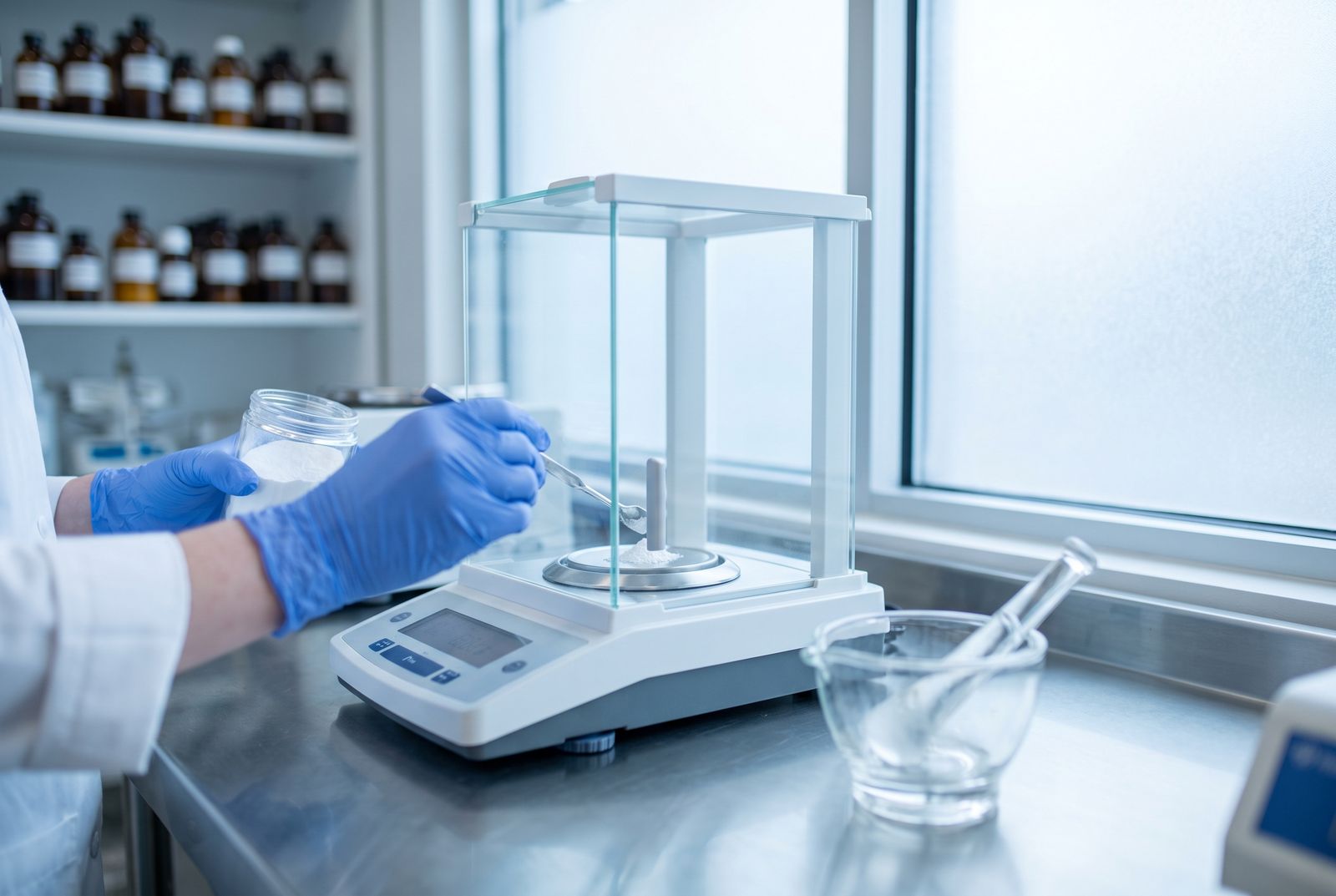
When hospitals, clinics and retail pharmacies may compound, what HSA requires when compounding is outsourced, and when SAR or registration is the better route.
INNORINI PTE. LTD. (UEN 202015523Z) explains how compounding of therapeutic products is regulated in Singapore. HSA expects hospitals, medical clinics and retail pharmacies to compound only when no commercially available registered product exists. They may then compound without a manufacturer’s licence at their own licensed premises, under a qualified practitioner or pharmacist. If a hospital or clinic outsources compounding, the third party must be an HSA-licensed manufacturer working at its approved premises under a contract.
At a glance
HSA describes compounding of therapeutic products as activities such as formulating, mixing, assembling or repacking therapeutic products. It is meant for patients whose needs no commercially available product meets, for example a different strength, a liquid instead of a tablet, or a version without an ingredient the patient cannot take.
Diluting or reconstituting a therapeutic product according to the directions for use on its label is not a compounding activity, according to HSA.
Licensed hospitals, medical clinics and retail pharmacies may compound without holding a manufacturer’s licence only when every one of these conditions is met.
| Availability | The final compounded product is not commercially available in Singapore. |
|---|---|
| Premises | Compounding takes place at the licensed institution or retail pharmacy. |
| Supervision | It is done by, or under the supervision of, a qualified practitioner or pharmacist practising there. |
| Expiry date | Each product carries an appropriate expiry date, set by a specified publication or supported by a stability study. |
| Prescription | Products containing a prescription-only medicine for a patient’s use need a valid prescription or a qualified practitioner’s written instructions. Repacking purely for dispensing is exempt. |
| Records | Where such a product is compounded for regular clinical use, the practitioner’s written instructions are documented and kept for at least two years. |
Sterile therapeutic products must be compounded in a practice setting within the licensed institution or pharmacy where standards for clean rooms and sterile preparation are in place and properly documented.
Hospitals and medical clinics may transfer compounded products to another licensed healthcare institution, as long as the preparations are not commercially available. No wholesaler’s licence is needed for this transfer. The institution that compounded the product must keep records of receipt and supply, and show them to HSA on request.
Medical clinics need HSA’s prior approval before transferring. The request includes:
Hospitals and medical clinics can outsource compounding to a third party. HSA sets the conditions, and the steps below follow them in order.
Check that no commercially available registered product meets the patient’s need. If a finished product exists overseas, the Special Access Route may fit better.
The third party must hold a manufacturer’s licence issued by HSA. A pharmacy or laboratory without one cannot take on outsourced compounding.
A contractual agreement between the hospital or medical clinic and the licensed manufacturer must be in place.
Compounding follows the chemical composition and written instructions of a qualified practitioner at the hospital or clinic. Repacking purely for dispensing is exempt.
The manufacturer compounds only at the premises approved under its licence, and under the conditions that licence sets.
Yes, in limited cases. A licensed retail pharmacy may compound a product to treat people on board a ship or aircraft only if the product is not commercially available, is required on board under Singapore’s merchant shipping medical-stores rules or the Air Navigation Order, and is compounded under the terms of the pharmacy’s licence.
The right route depends on whether a suitable product already exists, and where.
Best when: no commercially available product meets a patient’s need, so a preparation has to be made.
Who: the licensed hospital, clinic or pharmacy, or an HSA-licensed manufacturer under contract.
See HSA’s conditions →Best when: a finished product exists overseas but is not registered in Singapore, for named patients or hospital buffer stock.
Who: a licensed healthcare institution, or a company applying on its behalf. HSA’s target is 14 working days.
How SAR works →Best when: you want to supply a product commercially in Singapore.
Who: the Singapore registrant. HSA evaluates through the full, abridged or verification route.
HSA registration →Send us the product, its strength and dosage form, and the patient need. Our regulatory team will tell you which route fits.
Request a feasibility review →Innorini Pte Ltd is an HSA-licensed therapeutic products wholesaler with a regulatory affairs team. When a compounding question comes up, we can:
This page summarises HSA’s published rules. It is not legal advice, and HSA’s current guidance always takes precedence.